
· Manaloahealth
Everyone knows what they should do. Fewer people manage to do it day after day. The gap between knowing and doing isn't about willpower or motivation, it's about consistency, and consistency is a skill you can build like any other. Whether your goal is exercising regularly, writing a book, eating better, growing a business, or learning an instrument, the principles are the same. Here are the best pieces of advice for becoming the kind of person who shows up, again and again.
1. Start Absurdly Small
The single biggest reason people quit is that they start too big. Motivation is high on day one, so they commit to an hour a day, then miss a session, feel discouraged, and abandon the whole thing.
The fix is to shrink the goal until it feels almost too easy. Two minutes of exercise. One paragraph. One page of reading. The point isn't the size of the action; it's proving to yourself that you show up. Once showing up is automatic, scaling up is easy. A tiny habit you actually do beats an ambitious one you avoid.
2. Focus on Identity, Not Outcomes
Most people set goals around results: lose 20 pounds, write a novel, save a certain amount. But lasting consistency comes from a shift in identity. Instead of "I want to run a marathon," think "I am a runner." Instead of "I want to write a book," think "I am a writer."
Every time you take the small action, you cast a vote for the person you're becoming. Over time, those votes accumulate into a self-image that pulls the behavior along automatically. You're no longer forcing yourself to do something; you're simply being who you are.
3. Anchor New Habits to Existing Ones
Willpower is unreliable, but your existing routines are rock solid. You already brush your teeth, make coffee, and commute. Attach your new habit to one of these anchors and let the old routine trigger the new one.
"After I pour my morning coffee, I write for ten minutes." "After I take off my work shoes, I put on my running shoes." This technique, often called habit stacking, removes the need to remember or decide. The existing habit becomes the reminder.
4. Design Your Environment for Success
Consistency is far more about environment than discipline. If the healthy option is visible and easy while the distraction is hidden and hard, you'll naturally do the right thing without a fight.
Lay out your gym clothes the night before. Keep the guitar on a stand in the living room, not in a case in the closet. Delete the apps that derail you. Make the good behavior the path of least resistance and the bad behavior slightly inconvenient. You'll conserve willpower for when you truly need it.
5. Never Miss Twice
You will miss days. Life happens, and perfection is not the goal. The people who stay consistent aren't the ones who never slip; they're the ones who get back on track immediately.
Adopt one simple rule: never miss twice. Missing once is an accident. Missing twice is the start of a new habit, the wrong one. Skipping a single workout won't hurt you, but skipping the next one begins a pattern. Give yourself grace for the slip, then return the very next day.
6. Track It So You Can See It
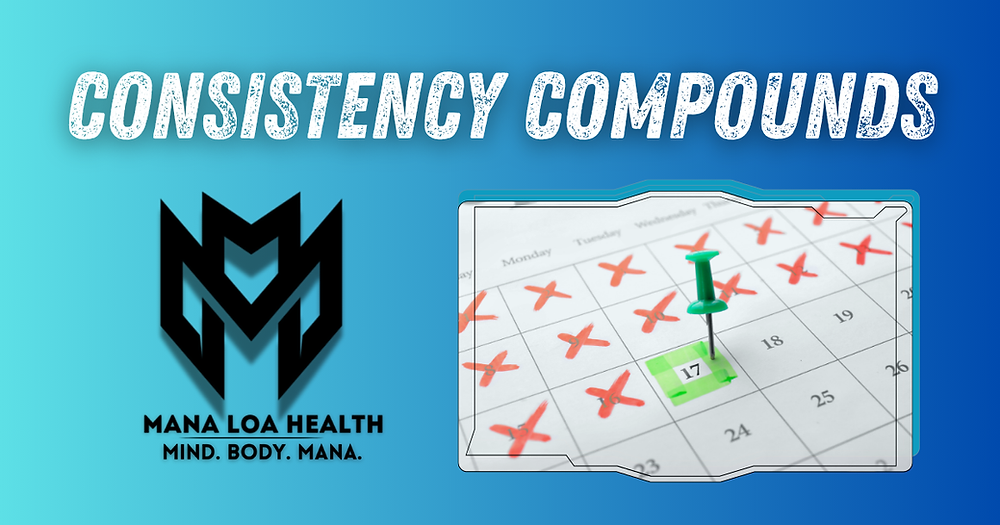
There's real power in a visible streak. Marking an X on a calendar or checking a box each day creates a small hit of satisfaction and a chain you won't want to break. Seeing your progress makes the invisible visible and turns consistency into a game you want to keep winning.
Keep the tracking simple. A wall calendar, a habit app, or a notebook all work. The method matters less than the act of noticing your own follow-through.
7. Make It Enjoyable
We repeat what feels good and avoid what feels like punishment. If your path to a goal is pure misery, no amount of discipline will sustain it. So find ways to make the process itself rewarding.
Listen to a favorite podcast only while walking. Work from a coffee shop you love. Pair the habit with music, good company, or a small reward afterward. When the behavior carries its own pleasure, consistency stops requiring force.
8. Plan for Obstacles in Advance
Consistency breaks down at predictable moments: travel, illness, stress, a busy week. The people who stay on track are the ones who decide ahead of time how they'll handle these disruptions.
Ask yourself: what's my minimum? On a chaotic day, what's the smallest version of this habit I can still do? A five-minute workout, a single sentence, one healthy meal. Having a fallback plan means a hard day becomes a scaled-down day instead of a missed day.
9. Be Patient With the Timeline
Results lag behind effort, sometimes for weeks or months. This delay is where most people quit, convinced it isn't working. But consistency compounds quietly beneath the surface long before the results become visible.
Trust the process and detach from immediate feedback. Your job is to show up and repeat the action. The outcomes will arrive on their own schedule, and they almost always arrive faster than you'd expect once they start.
The Bottom Line
Consistency isn't a personality trait some lucky people are born with. It's the natural result of a few smart choices: starting small, shaping your identity, anchoring habits to routines, designing your environment, and forgiving yourself when you slip. Master these, and consistency stops feeling like a battle and starts feeling like who you are.
You don't need to be perfect. You just need to keep showing up. Start today, start small, and let the compounding begin.