
· Manaloahealth
If you've spent any time in the wellness world lately, you've met glutathione. It's in the IV drips at the trendy clinics, the "detox" supplements, the skin-brightening pills, and roughly a thousand Instagram posts promising a glow-up from the inside out. It even comes with an impressive nickname: the "master antioxidant."
That's a lot of hype for one little molecule. So let's do what we always do around here and ask the honest question: does glutathione actually deliver, or is a lot of that glow coming from the marketing budget?
What glutathione actually is
Here's the part that's genuinely legit. Glutathione is real, it's important, and your body makes it on its own.
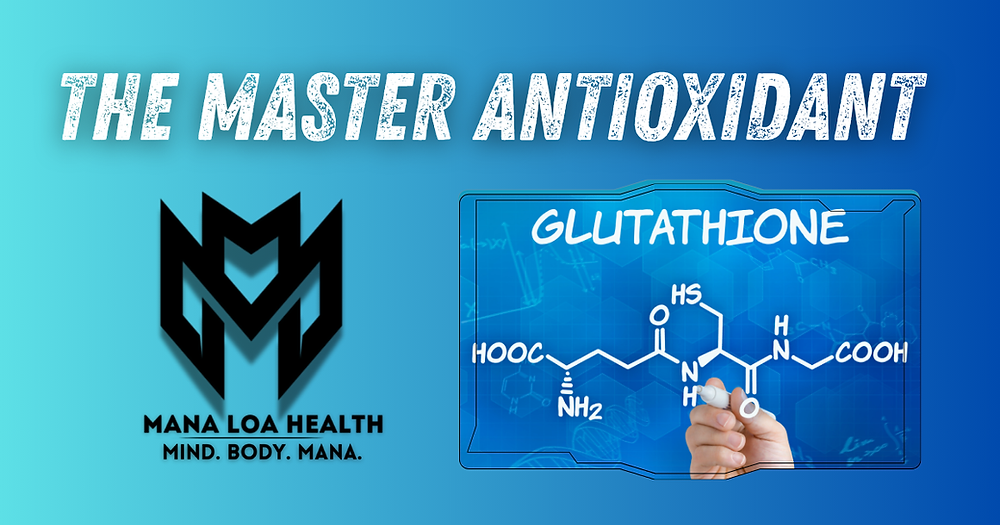
It's a tripeptide, which just means a small molecule built from three amino acids. Your cells produce it constantly, and it does serious work: it's one of your body's most important antioxidants, a key player in cellular defense, detoxification, and calming down the oxidative stress that builds up from daily living. When people call it the "master antioxidant," they're not entirely wrong. It really is a heavy hitter in your internal cleanup crew.
So the molecule itself? Not hype. The interesting question is what happens when you try to add more of it from a bottle or an IV bag.
The catch that changes everything: can you even absorb it?
Here's the plot twist the supplement labels tend to gloss over. Getting glutathione into your body is surprisingly hard.
The effectiveness of oral glutathione is well known to be limited by its low bioavailability, because the molecule is unstable and tends to get broken down in your digestive tract before it can reach your bloodstream.
In plain terms: you swallow the pill, your gut takes it apart, and a lot of what you paid for never makes it to the party.
This isn't a minor footnote. It's the entire ballgame. As one research team put it, an oral supplement only works if it can actually cross from your gut into your circulation. If it can't, it doesn't matter how powerful the molecule is in theory.
And the human data reflect exactly that uncertainty. In clinical trials, plain oral glutathione has produced genuinely mixed results. In one study, healthy adults taking 500mg twice daily for four weeks showed no significant change in their blood glutathione levels at all. In another, a similar dose taken over six months did raise levels. So the honest summary is that the evidence for standard glutathione pills reliably boosting your body's levels is limited and, frankly, inconsistent.
The skin-brightening question
A huge chunk of glutathione's popularity comes from its reputation as a skin-lightening or brightening agent, especially in many parts of Asia where it's widely used. The theory is that glutathione can dial down melanin production, the pigment that determines skin tone.
What does the research say? It's cautiously mixed. Reviews find that oral glutathione can produce real but variable decreases in melanin, but most of the supporting studies were done in test tubes or on small groups of people, which isn't enough to make big promises. On top of that, scientists still don't fully understand the exact mechanism behind the skin-tone effect. Promising signals, thin evidence.
There's also a "faster" route people turn to: intravenous glutathione, dripped straight into the bloodstream to bypass the whole gut-absorption problem. It acts quickly, but here's where you need to pay attention. IV glutathione has been linked to serious safety concerns, including severe allergic reactions and liver-related harm, and there are no standardized, well-established dosing protocols for skin lightening. Its actual effectiveness for lightening skin also remains unclear because of a lack of solid human trials. Fast is not the same as safe or proven.
So is there any good news? Actually, yes
Here's where it gets interesting. Because researchers know the absorption problem is the real bottleneck, a lot of recent work has gone into solving it rather than pretending it doesn't exist.
Newer delivery formats are being designed to protect glutathione on its journey and get more of it into your system. A 2026 clinical trial tested a novel micellar formulation (which wraps the glutathione in tiny carrier bubbles) and found it improved oral bioavailability compared to a standard preparation, while being well tolerated over 30 days. Other approaches under investigation include liposomal delivery and chemically modified "esterified" versions of glutathione that survive digestion better, along with precursors like NAC that give your body the raw materials to make its own glutathione.
The honest caveat: these are early, promising results that still need larger and longer studies before anyone can make confident claims. But they point to a smarter future, and they explain why not all glutathione products are created equal. The formulation may matter more than the number on the front of the bottle.
Glutathione is also being explored beyond skin, in areas like liver health, though so far much of that work comes from small, early-stage studies rather than large trials, so it belongs firmly in the "watch this space" category rather than the "proven" one.
The bottom line
Glutathione is a genuinely important molecule that your body relies on every day. But "important inside your body" and "works great as a supplement" are two different claims, and the gap between them is all about absorption.
Here's the fair, research-backed takeaway. Standard oral glutathione pills have a real bioavailability problem, and the evidence that they reliably raise your levels is mixed. The skin-brightening claims are popular but rest on limited and inconsistent data. IV glutathione carries real safety risks and isn't well standardized, so it deserves genuine caution rather than casual enthusiasm. And the most exciting developments are in newer delivery formulations that are trying to fix the absorption issue, with early results that are encouraging but not yet the final word.
None of this means glutathione is a scam. It means it's a real molecule wrapped in a lot of oversized promises, and the smart move is to approach it with curiosity, a healthy dose of skepticism toward miracle claims, and a clear understanding of what "master antioxidant" does and doesn't guarantee once it's sitting in a supplement bottle.
Currently treating patients located in:
Colorado, Florida, Hawaii, and Washington!
Click the link to schedule a consultation today!
https://mana-loa.clientsecure.me
-The Mana Loa Health Team
Patient safety is Mana Loa Health's top priority. The information discussed on this blog is not intended to recommend the self management of health problems or wellness. It is not intended to endorse or recommend any particular type of medical treatment or advice. The information provided on this website is for informational purposes and not a substitute for professional medical advice, diagnosis, or treatment. If you have questions or concerns about your health, please talk to your healthcare provider. No information contained on this blog should be used by any reader to disregard medical and/or health related advice or provide a basis to delay consultation with a physician or a qualified healthcare provider.
References
A Targeted Metabolomic Assessment of Oral Glutathione Bioavailability and Safety in Humans: A Randomized Crossover Clinical Trial, Antioxidants, 2026
Systematic Review of the Efficacy and Safety of Topical Glutathione in Dermatology, Journal of Clinical and Aesthetic Dermatology, 2025
Exploring the Safety and Efficacy of Glutathione Supplementation for Skin Lightening: A Narrative Review, Cureus, 2025
Glutathione bioavailability increases with novel formulation (accessible summary of the 2026 trial), NutraIngredients, 2026
Efficacy of glutathione for the treatment of nonalcoholic fatty liver disease: a pilot study, 2017